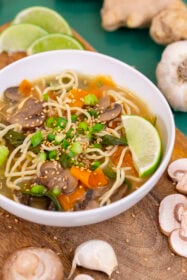
Miso-Ginger Vegetarian Broth Bowls
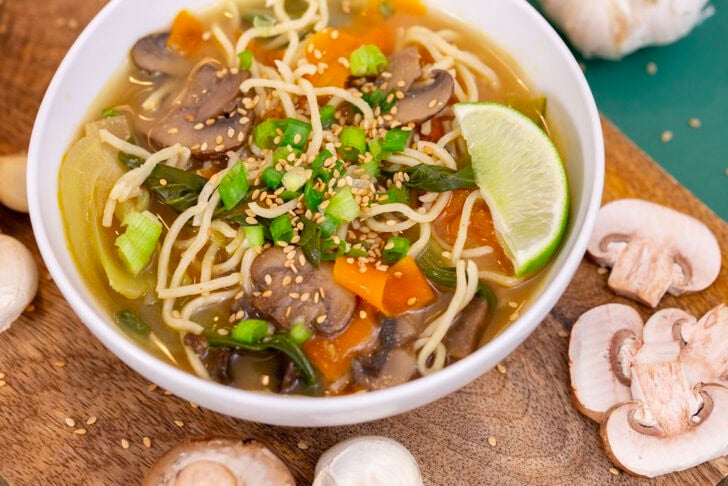
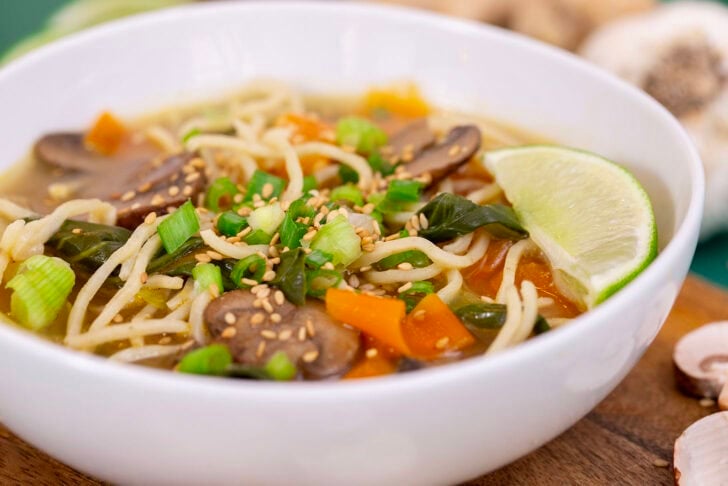
These miso-ginger broth bowls taste a lot like a big bowl of ramen. The broth is savory, salty, and full of umami from the miso, with warmth from fresh ginger and garlic. Browned mushrooms add an earthy, almost meaty depth, so the bowls feel hearty even though they’re completely vegetarian.
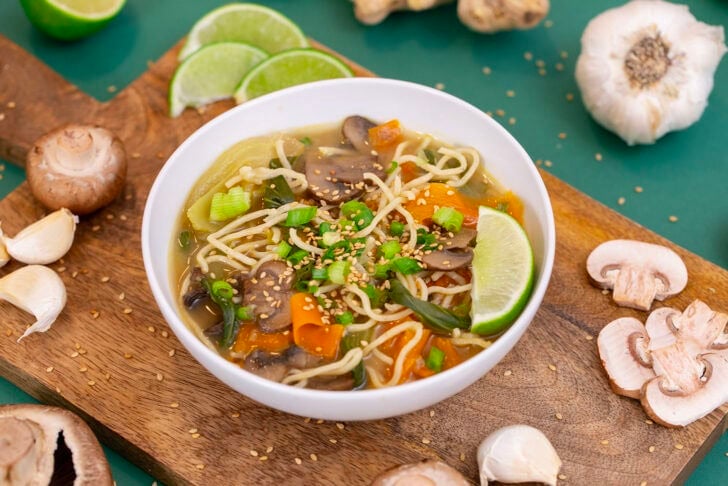
They’re also quick. The broth simmers for about 20 minutes while the noodles cook, then you pile in carrots and bok choy and finish everything with scallions, sesame seeds, and a little chili crisp. Dinner is on the table in about 35 minutes.
Why You’ll Love These Broth Bowls
These bowls are:
- savory, cozy, and full of umami
- ready in about 35 minutes
- vegetarian, and vegan as written
- easy to customize with whatever noodles, veggies, and toppings you have
- great for meal prep, since everything stores separately
Add crispy tofu or a soft-boiled egg if you want extra protein, or keep it simple and let the mushrooms do the work.
What Is a Broth Bowl?
A broth bowl is a simple, customizable meal built from four parts: a flavorful broth, noodles or grains, vegetables, and toppings or protein. Once you have a good broth, you can swap the rest based on what’s in your fridge.
Why Brown the Mushrooms First?
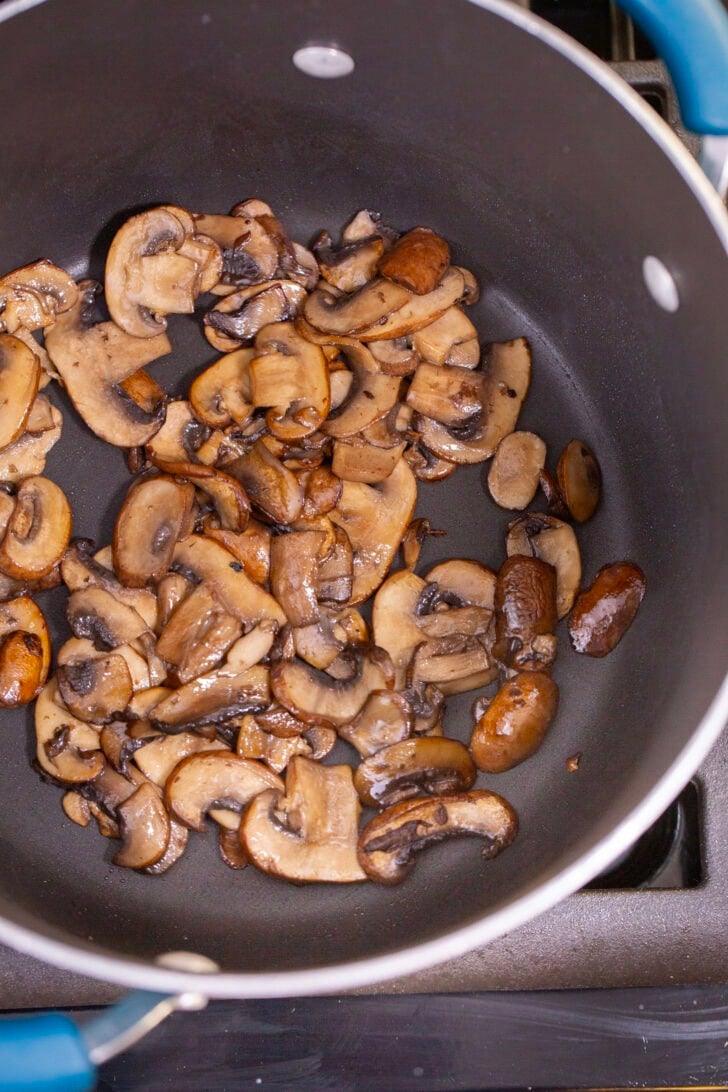
This is what gives a vegetarian broth real depth. Letting the mushrooms cook until they release their moisture and start to brown builds much more savory flavor than simmering them in broth. Together with the miso, they make the broth taste rich without any meat or long-simmered stock.
Which Miso Should I Use?
White or yellow miso both work well here. White miso is milder and slightly sweeter, and yellow miso is a little stronger. Red miso is much more assertive, so if that’s what you have, start with less and add more to taste.
Why Dilute the Miso Before Adding It?
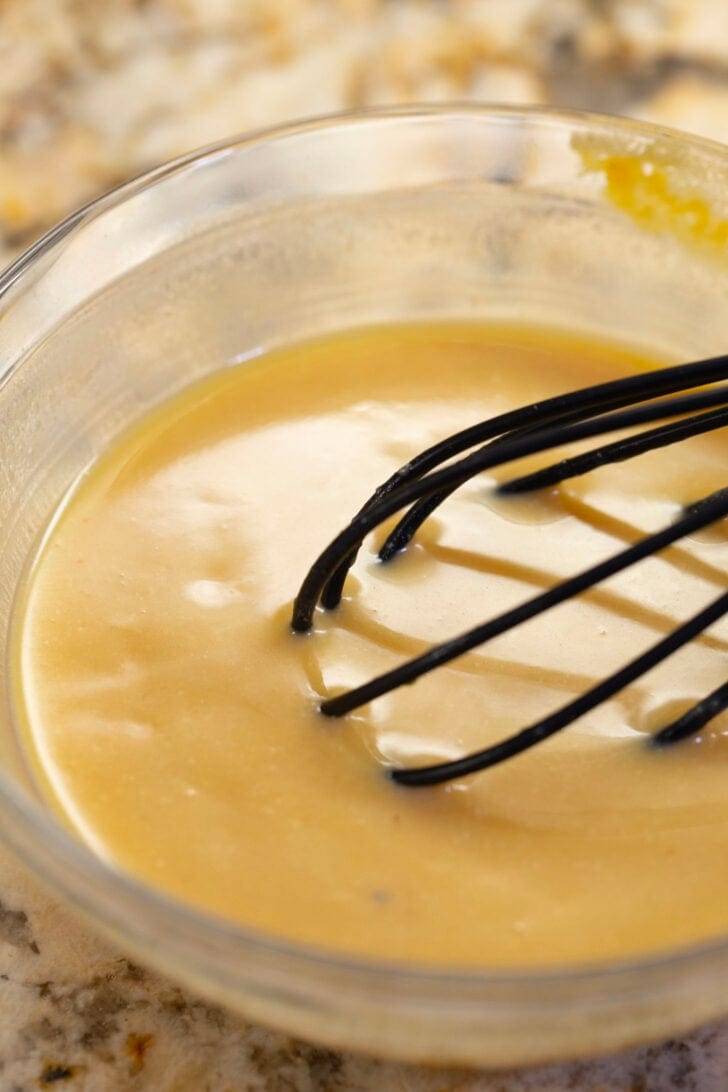
Whisking the miso with a little hot broth first gets rid of any lumps, so it blends evenly into the soup. Add it at the end, off the heat, and avoid boiling the broth afterward. That keeps the miso’s flavor from getting dull.
Ingredients You’ll Need
For the broth:
- Mushrooms. Shiitake or cremini both work. They’re what make the broth taste savory and hearty.
- Fresh ginger and garlic. Grate them fresh for the brightest flavor.
- Low-sodium vegetable broth. Starting with low-sodium broth lets you control the salt, since miso and soy sauce are already salty.
- Low-sodium soy sauce or tamari. It adds a little more savory depth. Use tamari to make it gluten-free.
- White or yellow miso paste. This is the star of the broth. It adds that salty, savory umami flavor.
- Rice vinegar. Just a little brightens the broth without making it taste sour.
- Toasted sesame oil. A teaspoon at the end adds a nutty, toasty finish.
For the bowls:
- Noodles. Ramen, soba, or rice noodles all work.
- Carrots. Cut into thin matchsticks or ribbons so they cook quickly.
- Baby bok choy or spinach. Bok choy adds more texture and crunch. Spinach is even easier and wilts almost instantly.
- Toppings. Scallions and sesame seeds, plus chili crisp, sriracha, or lime if you like.
How to Make Miso-Ginger Broth Bowls
Step 1 – Cook the noodles.
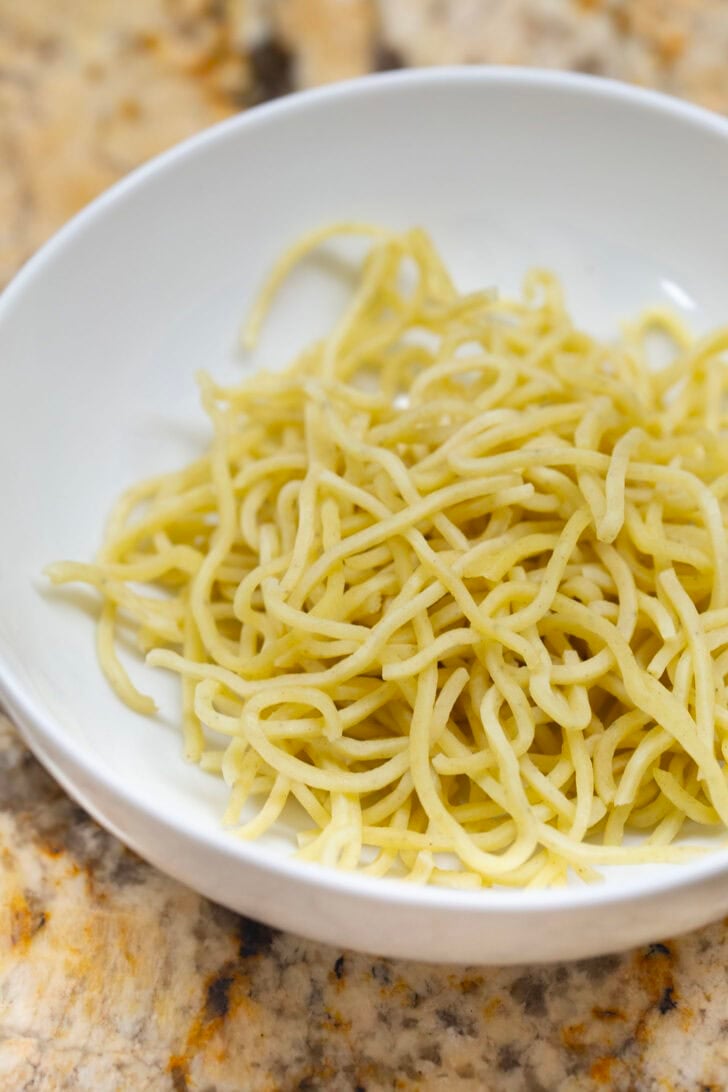
Cook the noodles separately according to the package directions until just tender, then drain well. If you’re using soba, give them a quick rinse under cool water to remove extra starch. Divide the noodles among 4 bowls.
Step 2 – Heat the oil.
While the noodles cook, heat the oil in a large pot or Dutch oven over medium-high heat.
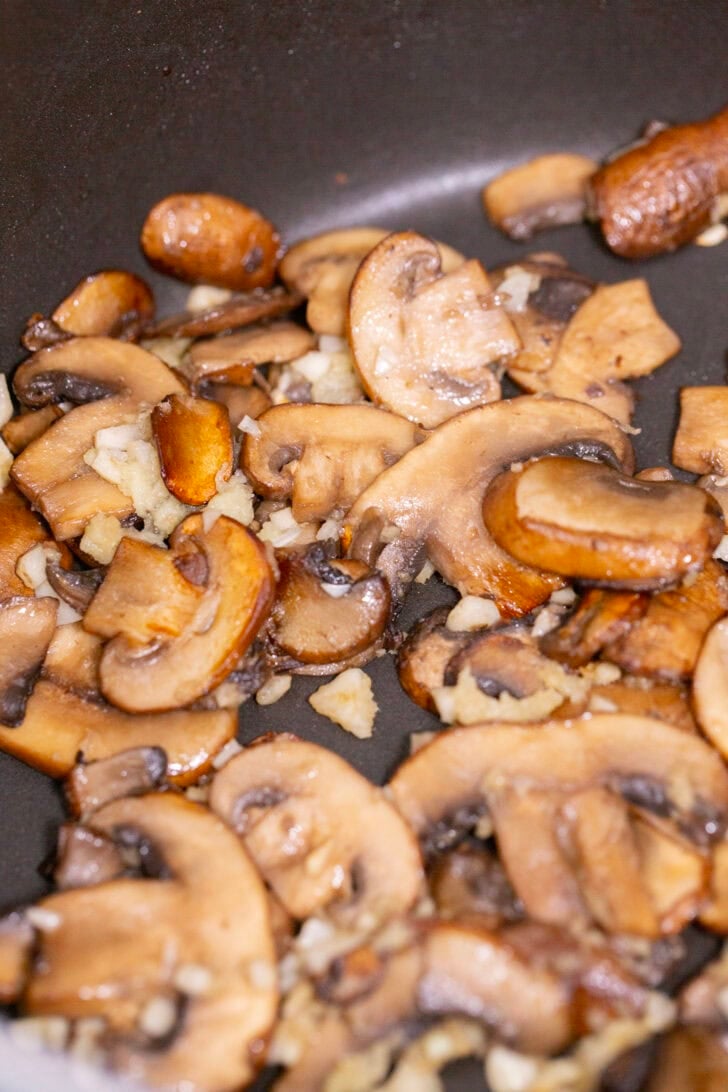
Step 3 – Brown the mushrooms.
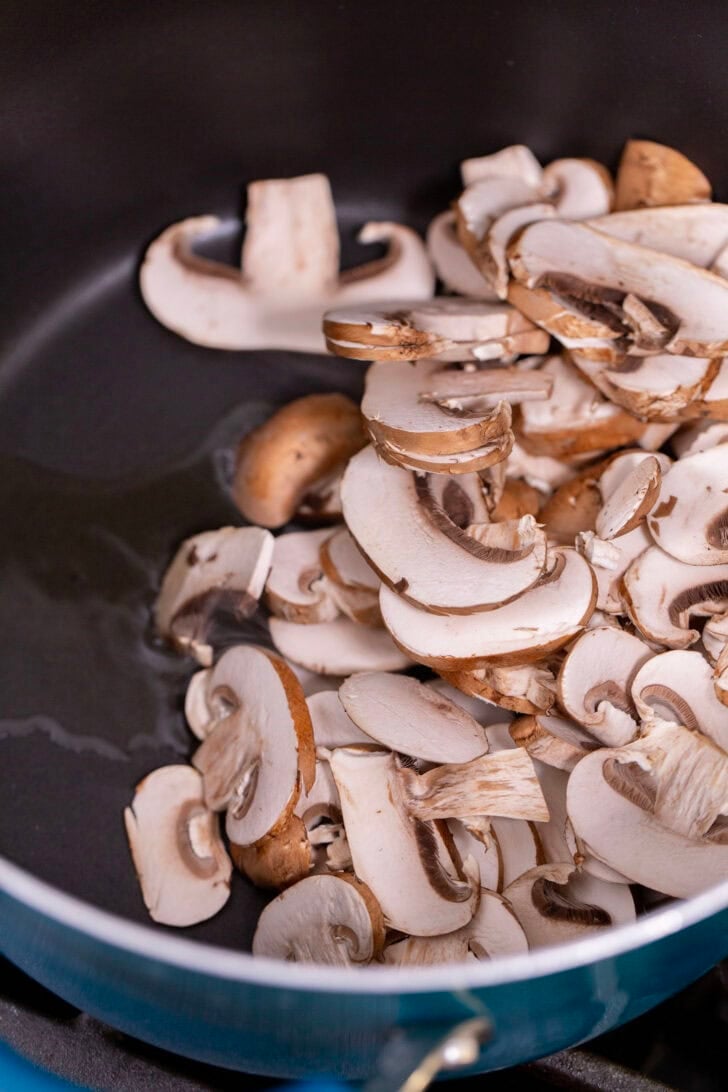
Add the mushrooms and cook for 5 to 7 minutes, stirring now and then, until they’ve released their moisture and started to brown.
Step 4 – Add the ginger and garlic.
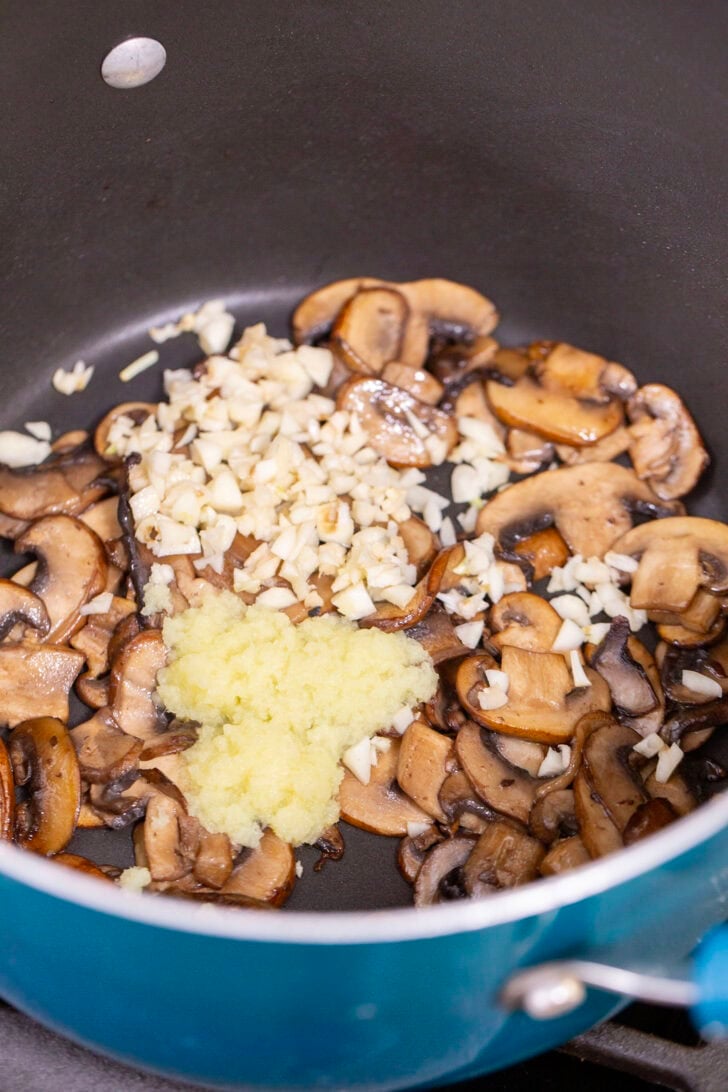
Turn the heat down to medium. Add the ginger and garlic and cook for 30 to 60 seconds, stirring constantly, until fragrant.
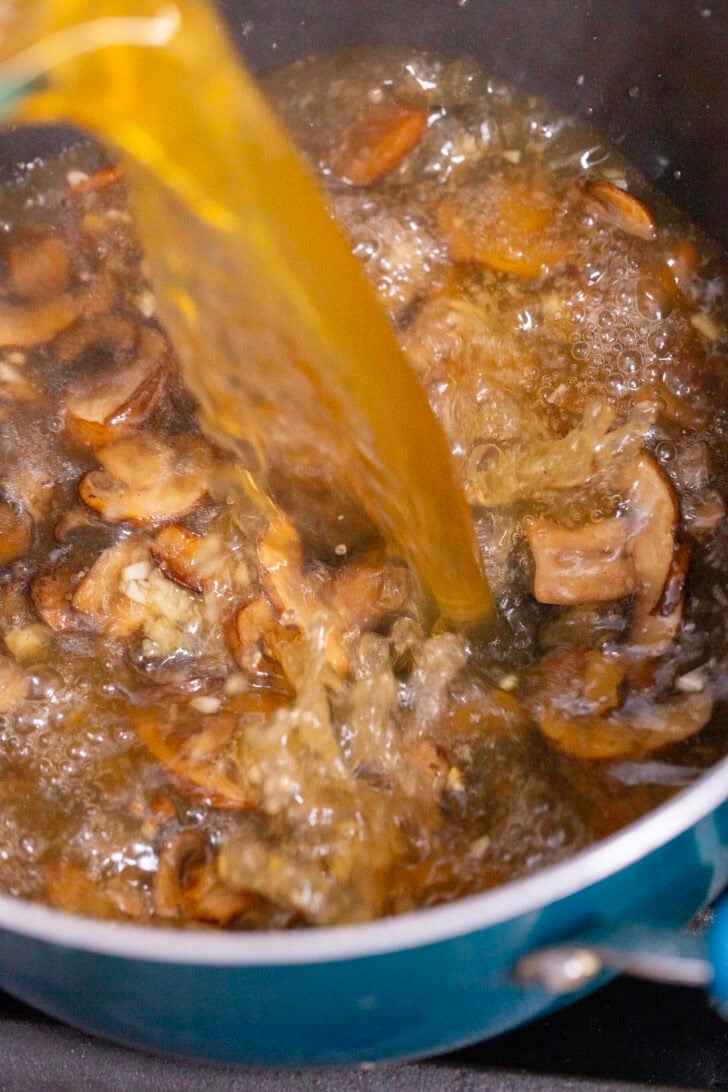
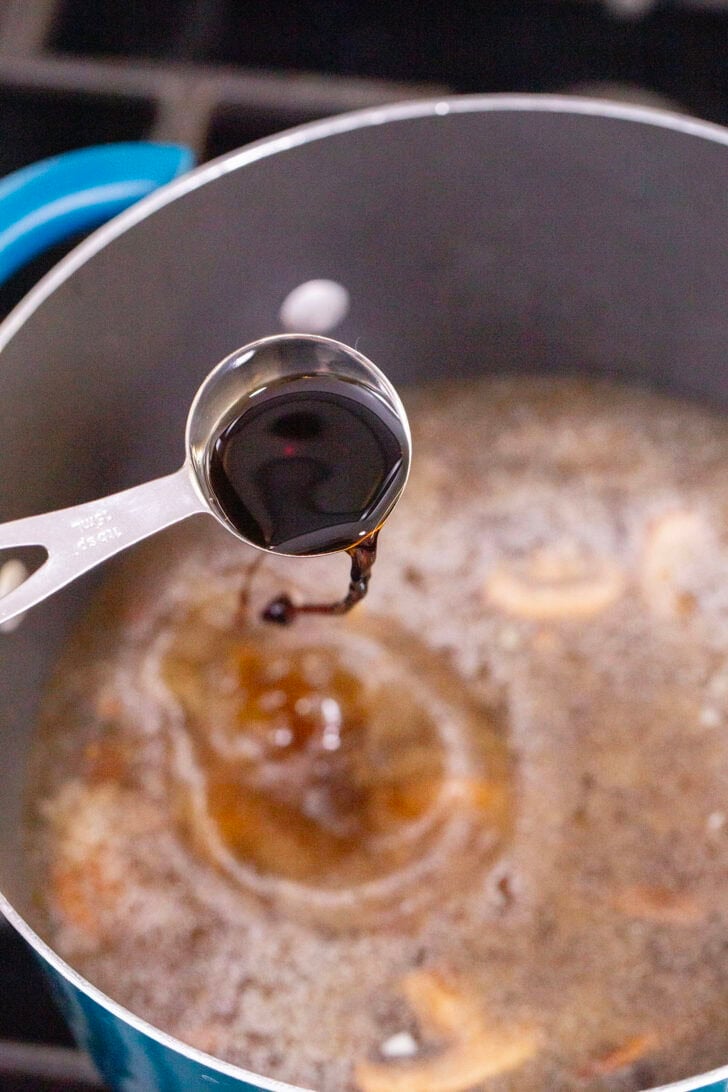
Step 5 – Simmer the broth.
Add the vegetable broth and soy sauce. Bring it to a gentle simmer and cook for 5 to 8 minutes, so the mushrooms and aromatics can flavor the broth.
Step 6 – Add the bok choy stems.
Add the thicker bok choy stems and simmer for about 2 minutes.
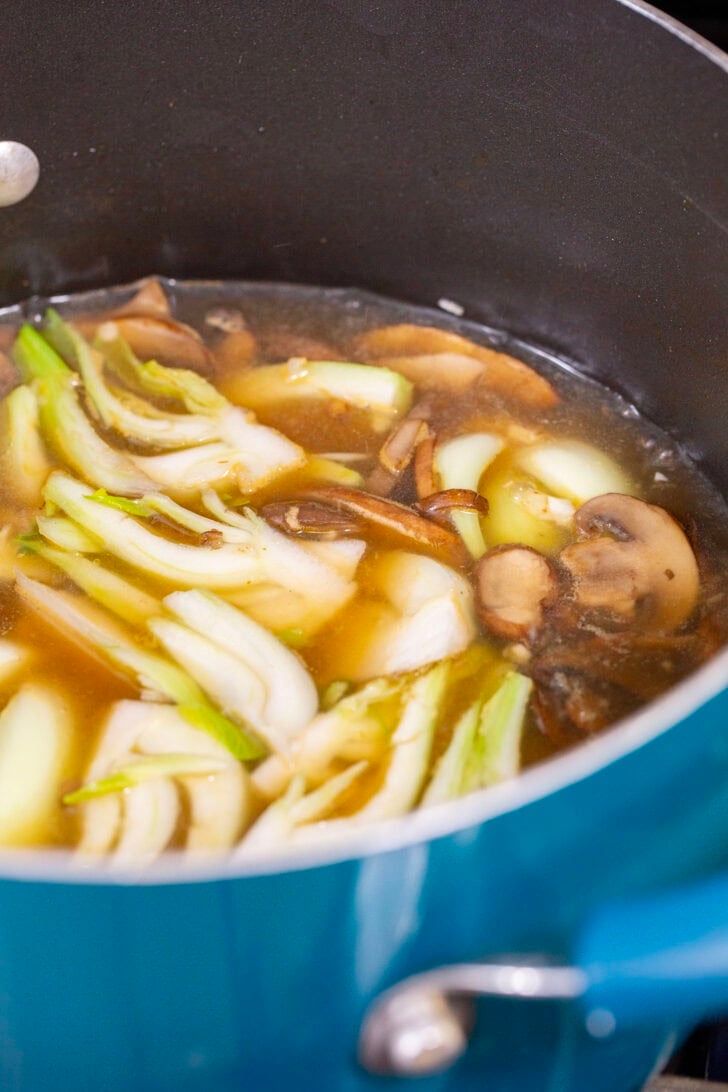
Step 7 – Add the carrots and greens.
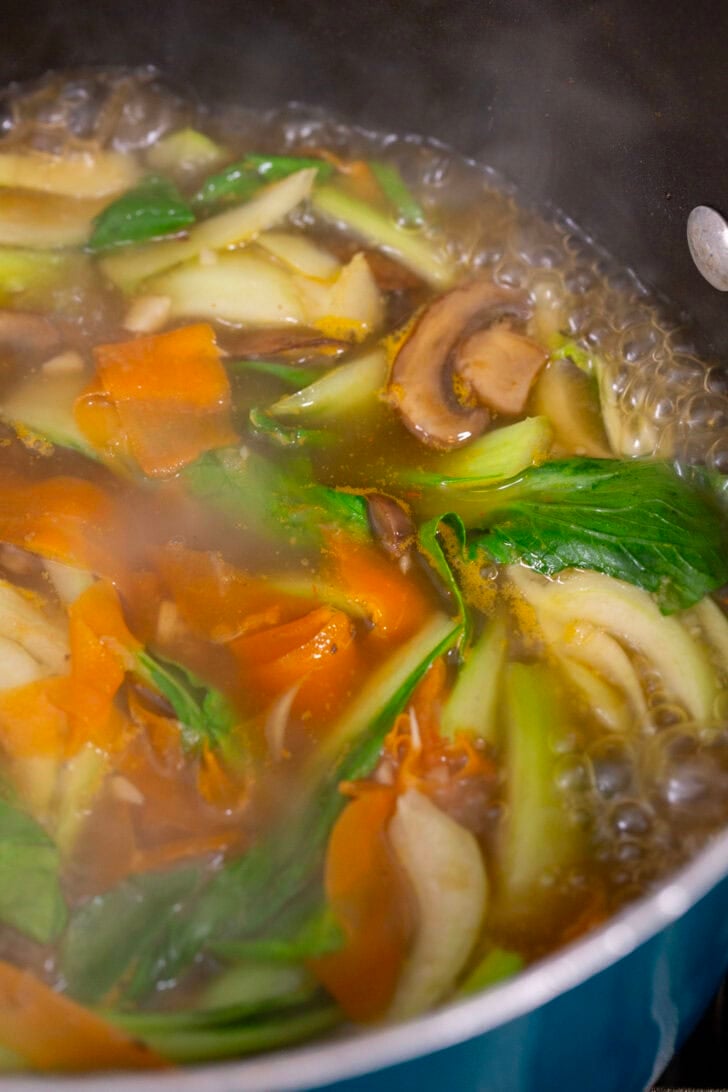
Add the carrots and bok choy leaves and cook for another 1 to 2 minutes, until the carrots are just tender and the leaves are wilted but still bright green. If you’re using spinach, add it during the last 30 to 60 seconds.
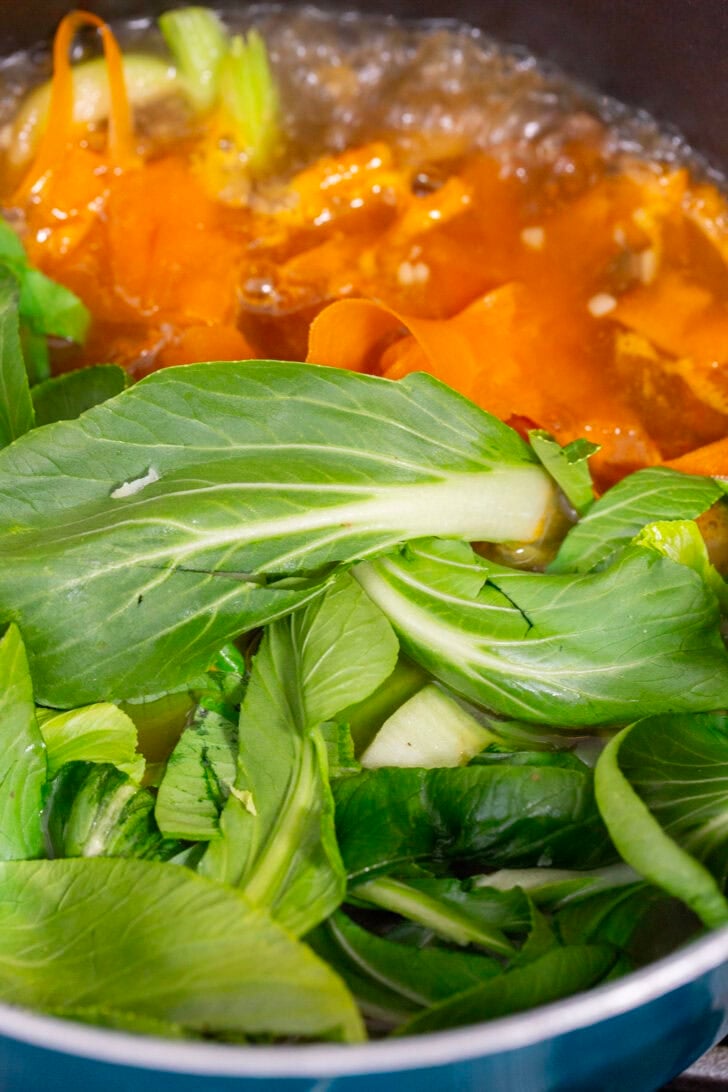
Step 8 – Dilute the miso.
Put the miso in a small bowl, ladle in about ½ cup of the hot broth, and whisk until completely smooth.
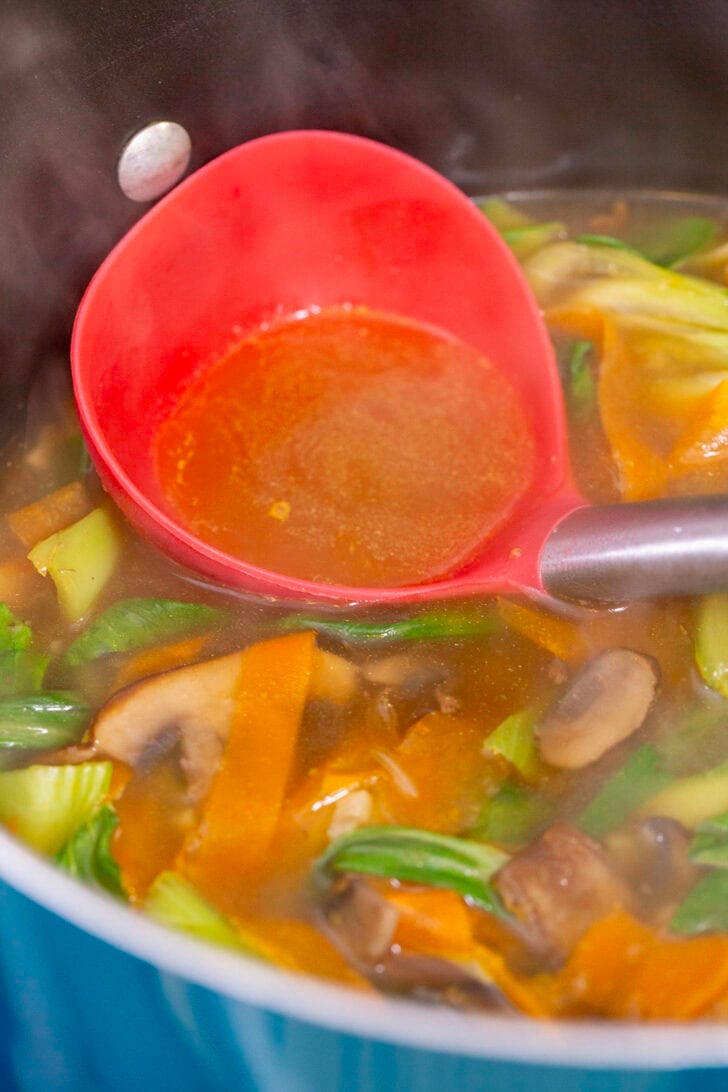

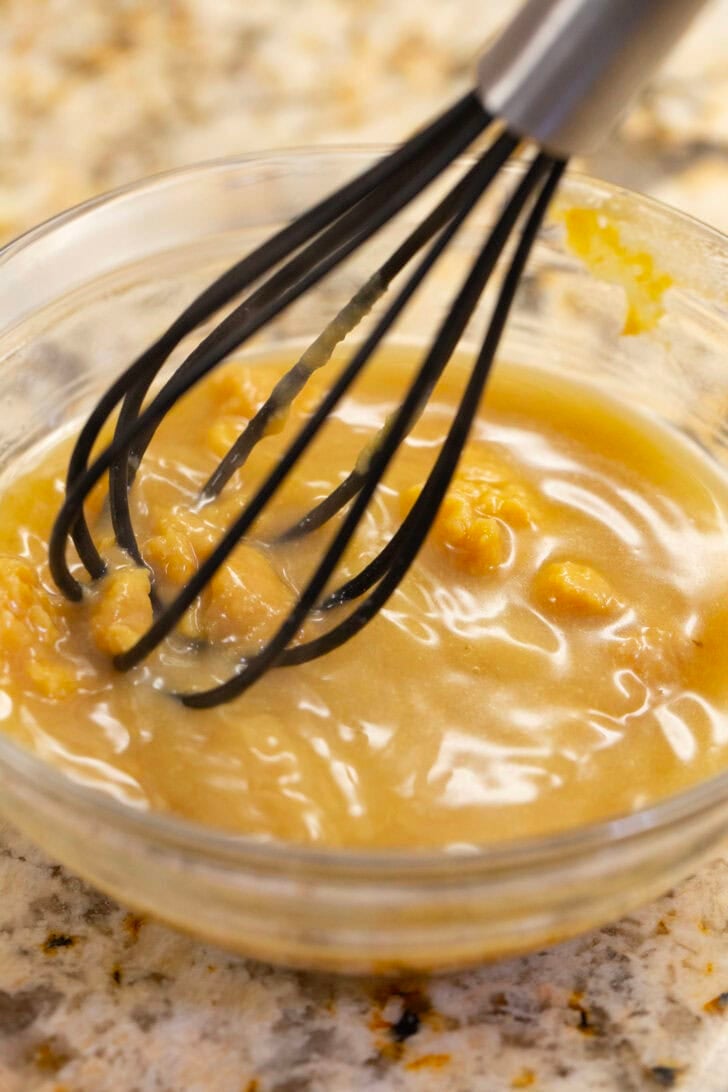
Step 9 – Stir in the miso.
Take the pot off the heat, then stir in the diluted miso, rice vinegar, and sesame oil.
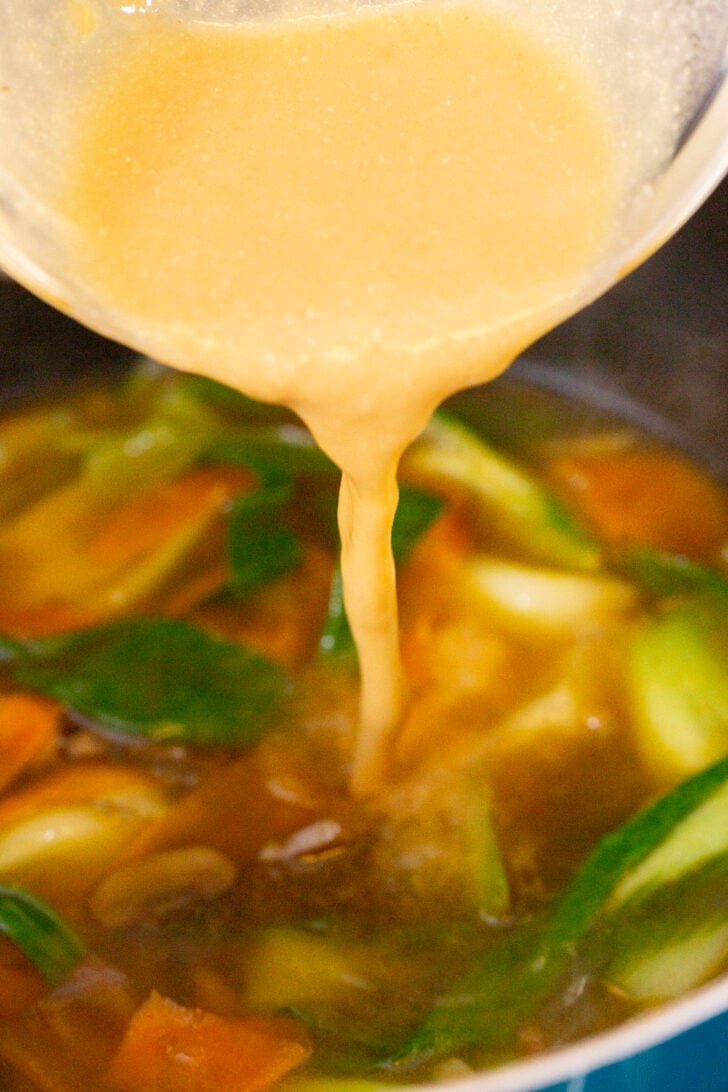
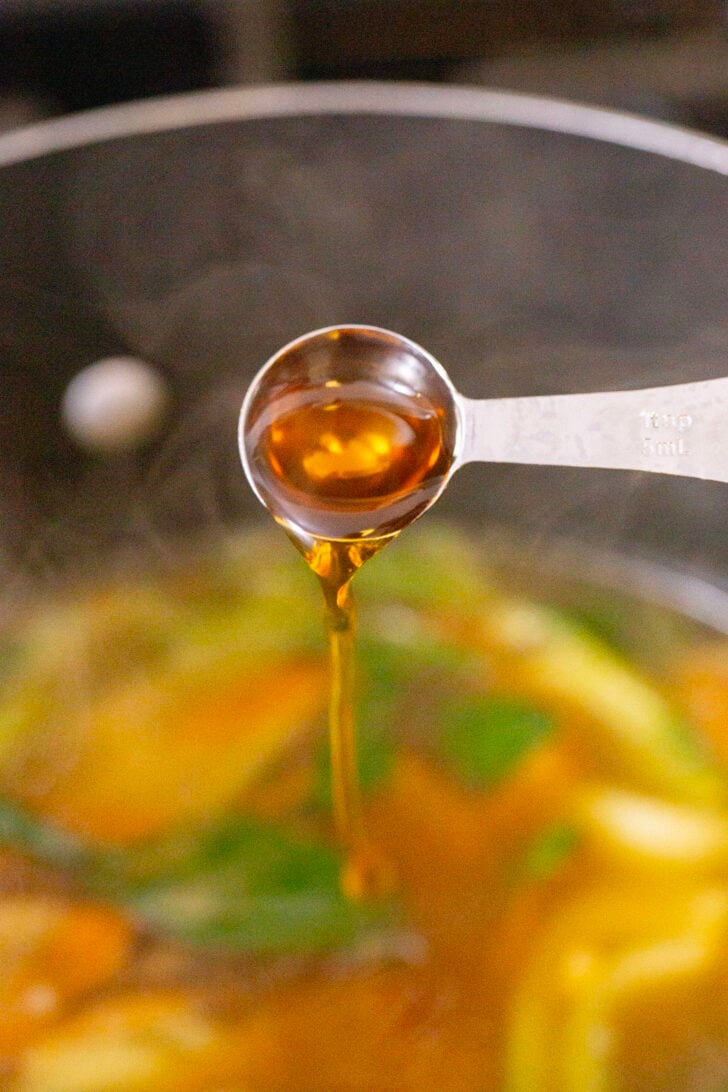
Step 10 – Taste and adjust.
Taste the broth. If it needs more flavor, add another ½ to 1 tablespoon of miso or a small splash of soy sauce. Miso and broth vary a lot in saltiness from brand to brand, so this step really matters.
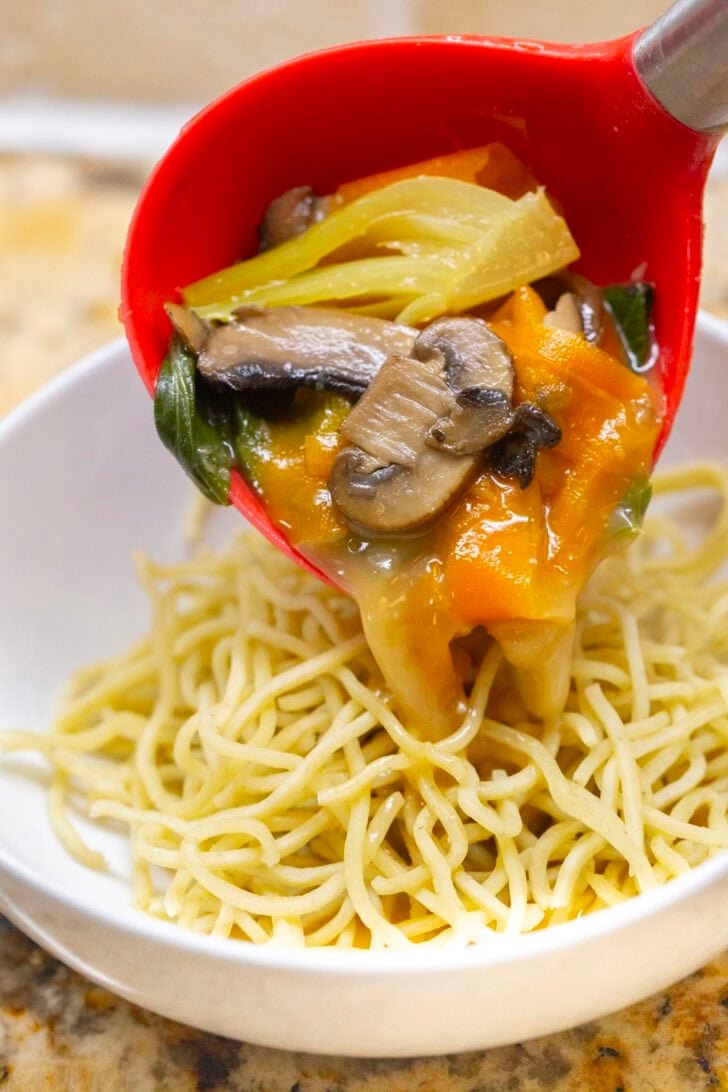
Step 11 – Assemble the bowls.
Ladle the hot broth, mushrooms, and vegetables over the noodles.
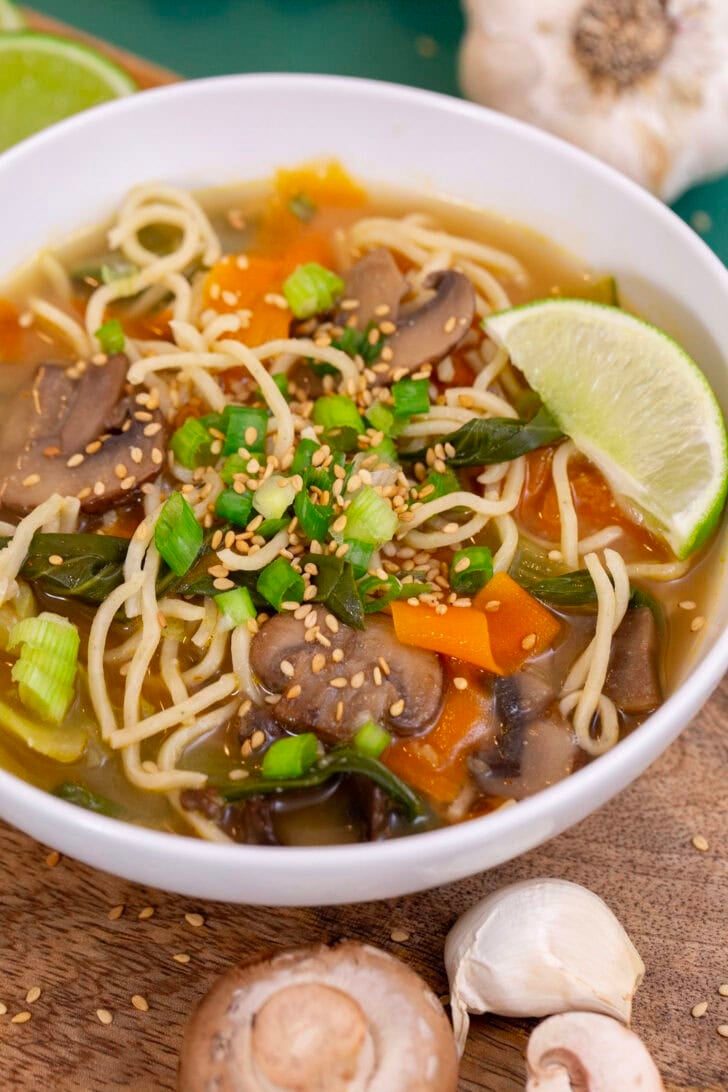
Step 12 – Top and serve.
Finish with scallions and sesame seeds, plus crispy tofu, chili crisp, sriracha, or a squeeze of lime if you like.
Tips for the Best Broth Bowls
Let the mushrooms actually brown. Give them the full 5 to 7 minutes and don’t stir too often. You want color on them before the broth goes in.
Cook the noodles separately. Noodles keep soaking up liquid in the broth, so cooking them on their own keeps the broth brothy and the noodles from getting mushy.
Season at the end. Different brands of miso and broth vary a lot in saltiness, so taste after the miso goes in and adjust from there. If the broth tastes bland, add more miso before more soy sauce. If it’s too salty, stir in ½ to 1 cup of water.
How to Customize Your Broth Bowl
Think of this recipe as a formula. Once you have the broth, mix and match the rest:
- Base: ramen, soba, rice noodles, or cooked rice
- Vegetables: mushrooms, bok choy, spinach, cabbage, broccoli, carrots, or snow peas
- Protein: crispy tofu, edamame, or a soft-boiled egg
- Toppings: scallions, sesame seeds, chili crisp, nori, or lime
Adding Crispy Tofu
For a heartier bowl, top it with my Sesame-Ginger Tofu. It’s made with soy sauce, rice vinegar, sesame oil, ginger, and garlic, so the flavors go perfectly with this broth. For something even simpler, pan-sear cubed extra-firm tofu until golden and season it with a little soy sauce.
Is It Vegan or Gluten-Free?
As written, the broth bowls are vegan, as long as your vegetable broth and miso are vegan. Just skip the egg if you’re adding toppings.
To make them gluten-free, use tamari instead of soy sauce and choose certified gluten-free soba or rice noodles. Check your miso too, since some brands contain gluten.
Meal Prep and Storage
These bowls are great for meal prep. The trick is storing everything separately. Keep the broth with the vegetables in one container and the cooked noodles in another, along with any tofu or toppings. Store them in the fridge for up to 4 days.
When you’re ready to eat, gently reheat the broth on the stove until hot but not boiling, then pour it over the noodles.
FAQ
Is this broth bowl vegan? Yes, as written, as long as your vegetable broth and miso are vegan.
Can I make it gluten-free? Yes. Use tamari instead of soy sauce and gluten-free soba or rice noodles, and check that your miso is gluten-free.
What kind of miso is best for soup? White or yellow miso. White is milder and slightly sweeter, and yellow is a little stronger. If you use red miso, start with less.
Why shouldn’t you boil miso? Boiling dulls miso’s flavor. Add it at the end, off the heat, and reheat leftovers gently.
Can I cook the noodles in the broth? You can if you’re serving everything right away. But the noodles will absorb broth, so if you expect leftovers, cook them separately.
My broth tastes bland. What should I do? Add more miso first, ½ tablespoon at a time. It adds more flavor than just adding more soy sauce.
How can I add more protein? Top your bowl with crispy tofu, edamame, or a soft-boiled egg.
More Cozy Bowls and Soups to Try
- Sesame-Ginger Tofu. It’s crispy, flavorful, and made to go on top of this bowl.
- Quick & Easy Minestrone Soup. Another veggie-packed soup that’s ready fast.
- 3-Ingredient White Bean Tomato Soup. It’s the easiest cozy soup for a busy night.
- Slow Cooker Jalapeno White Bean Soup. Hearty, a little spicy, and mostly hands-off.
- Garlic Cauliflower Fried Rice Bowl. Another savory, veggie-loaded bowl for weeknights.
Miso-Ginger Vegetarian Broth Bowls
Ingredients
Miso-Ginger Broth
- 1 tablespoon neutral cooking oil, such as avocado oil
- 8 ounces shiitake or cremini mushrooms, sliced (225g)
- 1 tablespoon freshly grated ginger
- 3 garlic cloves, minced or grated
- 6 cups low-sodium vegetable broth, (1.4L)
- 1 tablespoon low-sodium soy sauce or tamari
- 3 tablespoons white or yellow miso paste, or to taste
- 2 teaspoons unseasoned rice vinegar
- 1 teaspoon toasted sesame oil
For the Bowls
- 8 ounces ramen, soba, or rice noodles (225g)
- 2 large carrots, peeled and cut into thin matchsticks or ribbons
- 4 baby bok choy, quartered lengthwise, or 4 packed cups baby spinach
- 3 scallions, thinly sliced
- Sesame seeds, for serving
- Chili crisp, sriracha, or red pepper flakes, optional
- Lime wedges, optional
- Crispy tofu, optional
Instructions
- Cook the noodles separately according to package directions until just tender. Drain well. If using soba, rinse briefly under cool water to remove excess starch. Divide among 4 serving bowls.
- Meanwhile, heat the oil in a large pot or Dutch oven over medium-high heat.
- Add the mushrooms and cook for 5–7 minutes, stirring occasionally, until they've released their moisture and begun to brown.
- Reduce the heat to medium. Add the ginger and garlic and cook for 30–60 seconds, stirring constantly, until fragrant.
- Add the vegetable broth and soy sauce. Bring to a gentle simmer and cook for 5–8 minutes.
- Add the thicker bok choy stems. Simmer for about 2 minutes.
- Add the carrots and bok choy leaves and cook for 1–2 minutes, until the carrots are just tender and the leaves are wilted but still bright green. If using spinach, add it only during the final 30–60 seconds.
- Place the miso in a small bowl. Ladle in about ½ cup of the hot broth and whisk until completely smooth.
- Remove the pot from the heat, then stir in the diluted miso, rice vinegar, and sesame oil.
- Taste the broth. Add another ½–1 tablespoon miso or a small splash of soy sauce only if needed.
- Ladle the hot broth, mushrooms, and vegetables over the noodles.
- Top with scallions and sesame seeds. Add crispy tofu, chili crisp, sriracha, or lime as desired.
Notes
• Don’t boil the broth after adding the miso. It dulls the flavor.
• For crispy tofu, use Sesame-Ginger Tofu, or pan-sear cubed extra-firm tofu and season with soy sauce.
• Gluten-free: use tamari and gluten-free soba or rice noodles, and check that your miso is gluten-free.
• Vegan as written, as long as your broth and miso are vegan.
• Meal prep: store the broth and vegetables separately from the noodles for up to 4 days. Reheat the broth gently without boiling.